How to Make Enterprise Systems Available to AI at Scale




TL;DR: Enterprises are approaching AI integration one use case at a time. Each new agent or application gets connected to the systems it needs, creating duplicated integration work and making governance increasingly difficult.
A more scalable approach is to make enterprise systems available to AI once, through a governed catalogue of APIs that can be reused across models, agents and applications.
Connect systems once; enable many use cases.
The integration problem
This article looks at one part of Agentic AI transformation: connecting AI to the hundreds of systems that already exist inside a large enterprise.
Salesforce, SAP, ServiceNow, Microsoft 365, internal systems, legacy applications...
Potentially hundreds of systems exposing thousands of operations.
The obvious approach is to tackle this one use case at a time: build an AI application, connect it to the systems it needs, then repeat for the next use case.
That works for a pilot. It doesn't scale particularly well.
AWS describes the problem in similar terms: “each new agent integration adds point-to-point connections, separate credentials, and custom routing logic.”
Deloitte makes the corresponding case for reuse: standardized, shared APIs can provide AI systems with reusable and consistent access while reducing duplication and centralising governance.
So the question is:
How do we make enterprise systems available to AI without turning every new use case into another integration project?
Connect once, enable many use cases
The interesting thing is that enterprises already have much of the technology required to do this.
The rest of this article looks at how the pieces fit together:
- Machine-readable API specifications describe what enterprise systems can do.
- LLM tool calling gives AI models a way to use those capabilities.
- API catalogues and gateways provide a place to discover and govern them.
- Together, these can become a reusable enterprise capability catalogue for AI.
Let's start with the APIs enterprises already have.
Machine Readable API Specifications
About a million years ago, we invented ways for computer systems to describe their APIs.
One standard that gained a lot of traction was Swagger, now known as OpenAPI.
An OpenAPI specification gives us a machine-readable description of what a system can do.
Here's a deliberately tiny example:
{
  "paths": {
    "/contacts/{contactId}": {
      "patch": {
        "operationId": "updateContact",
        "parameters": [
          {
            "name": "contactId",
            "in": "path",
            "required": true
          }
        ]
      }
    }
  }
}
The real specifications are obviously much larger.
But the important thing is that we now have a machine-readable way to specify our systems:
Here is something this system can do, and here is how you call it.
LLMs can already call tools
In LLM API calls we can pass a tool defintion. This is very similar to the API defintion above.
So there's gnerally a mapping between what we specify in Open API and what the model can use.
{
  "type": "function",
  "function": {
    "name": "updateContact",
    "description": "Update a Salesforce contact",
    "parameters": {
      "type": "object",
      "properties": {
        "contactId": { "type": "string" },
        "phone": { "type": "string" }
      },
      "required": ["contactId", "phone"]
    }
  }
}
They can decide they need to call a tool and produce something conceptually like this:
{
  "name": "updateContact",
  "arguments": {
    "contactId": "0038X00001ABC",
    "phone": "+49 89 123456"
  }
}
That looks remarkably similar to something we've already described in our OpenAPI specification.
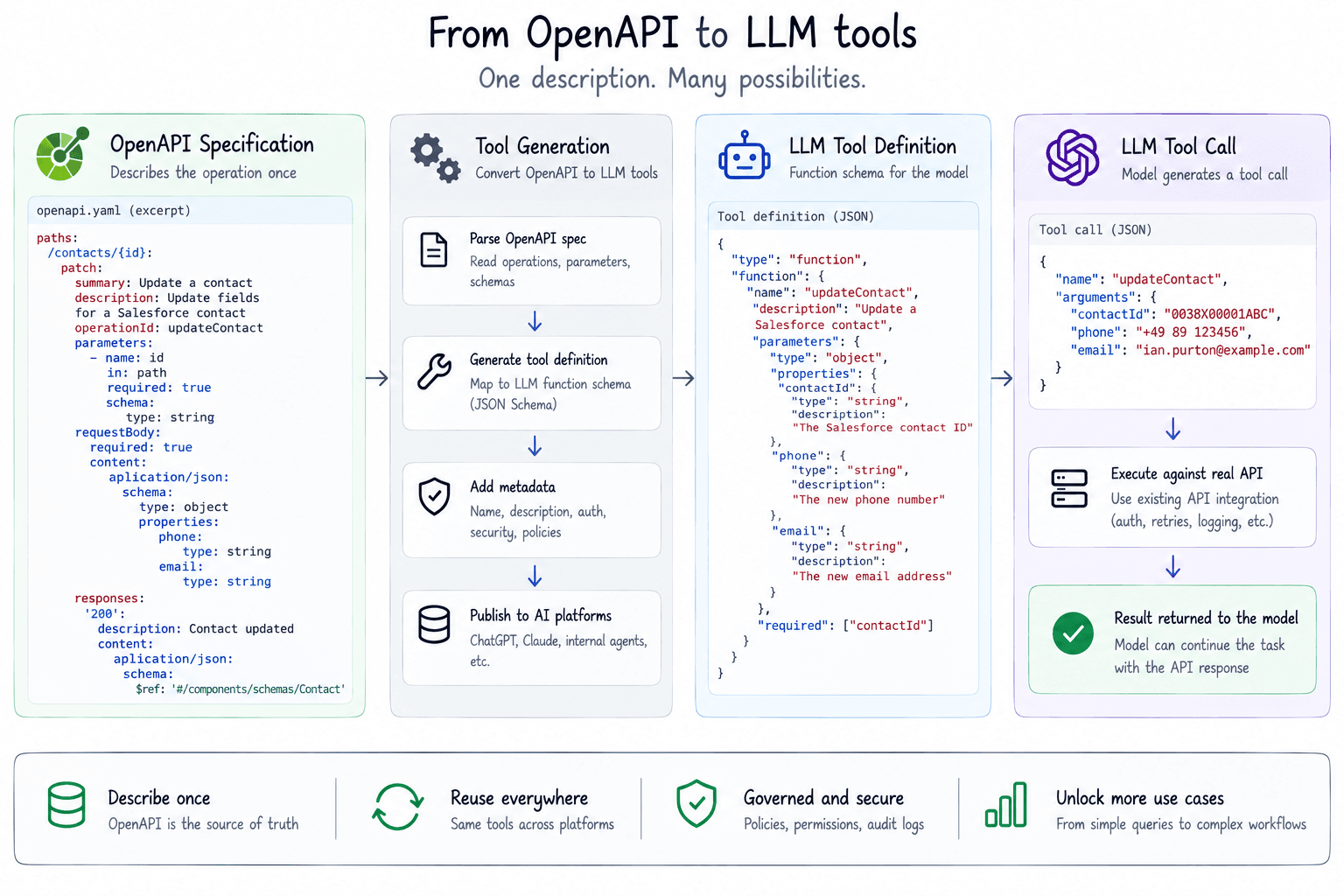
And that gives us an interesting bridge between the AI world and the systems we already have.
API Catalogs and Gateways
None of this is particularly new from an enterprise architecture perspective.
Companies have been cataloguing, securing, documenting and governing APIs for years.
Some enterprises may already have a large part of the answer sitting inside an API catalogue or API management platform.
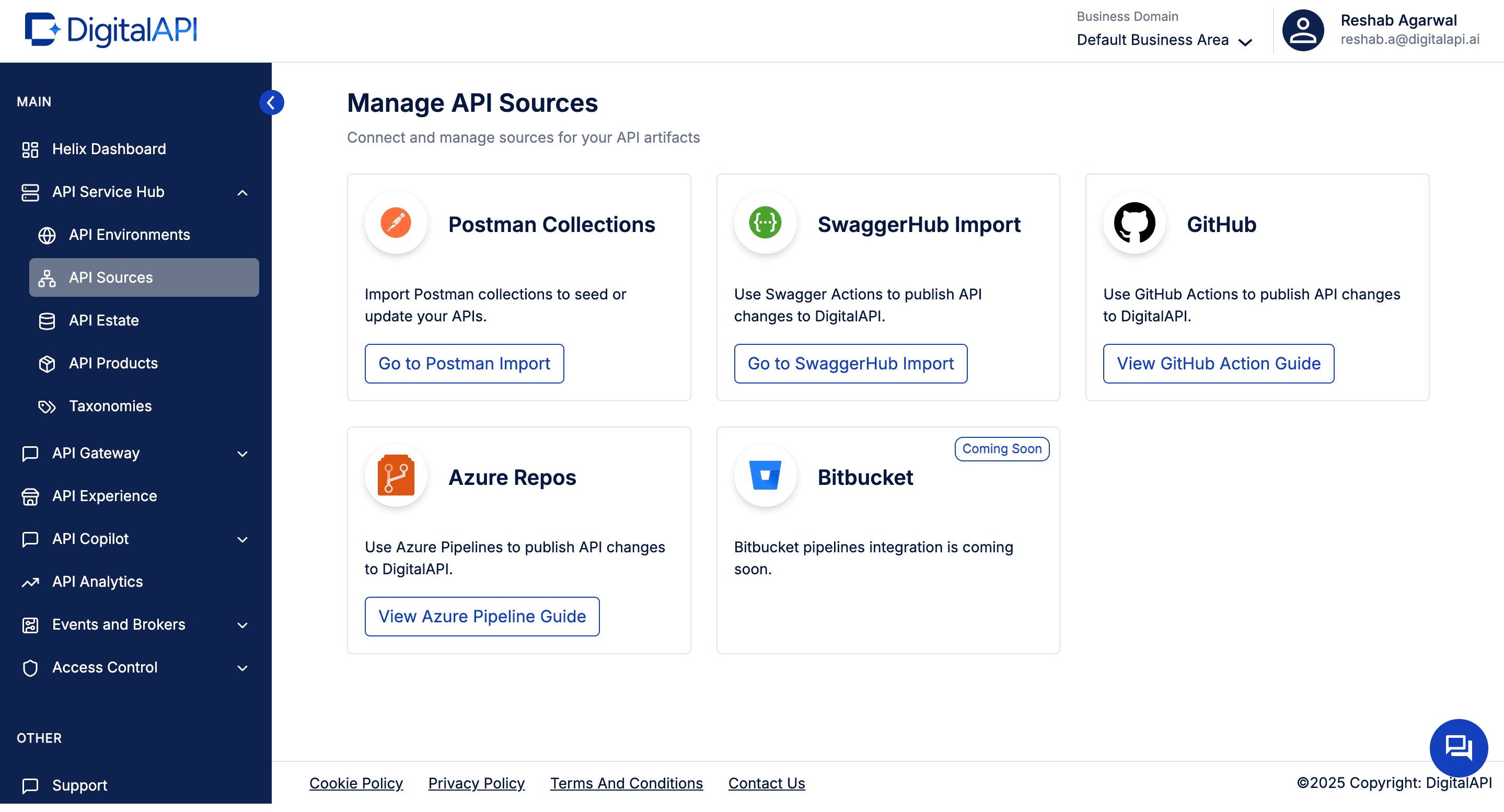
So my first question would be:
What do we already have?
Mapping the enterprise
I'd start by finding out:
- Do we already have an API catalogue?
- Do we have an API gateway?
- Are teams already maintaining OpenAPI specifications?
Then I'd go after the easy wins.
Start with cloud services
Cloud services are an obvious place to start because many already expose mature APIs.
- Salesforce
- Microsoft 365
- ServiceNow
- Jira
- Slack
Then progressively move further into the enterprise.
Internal services → backend systems → legacy applications → and, eventually, I'm looking at you SAP.
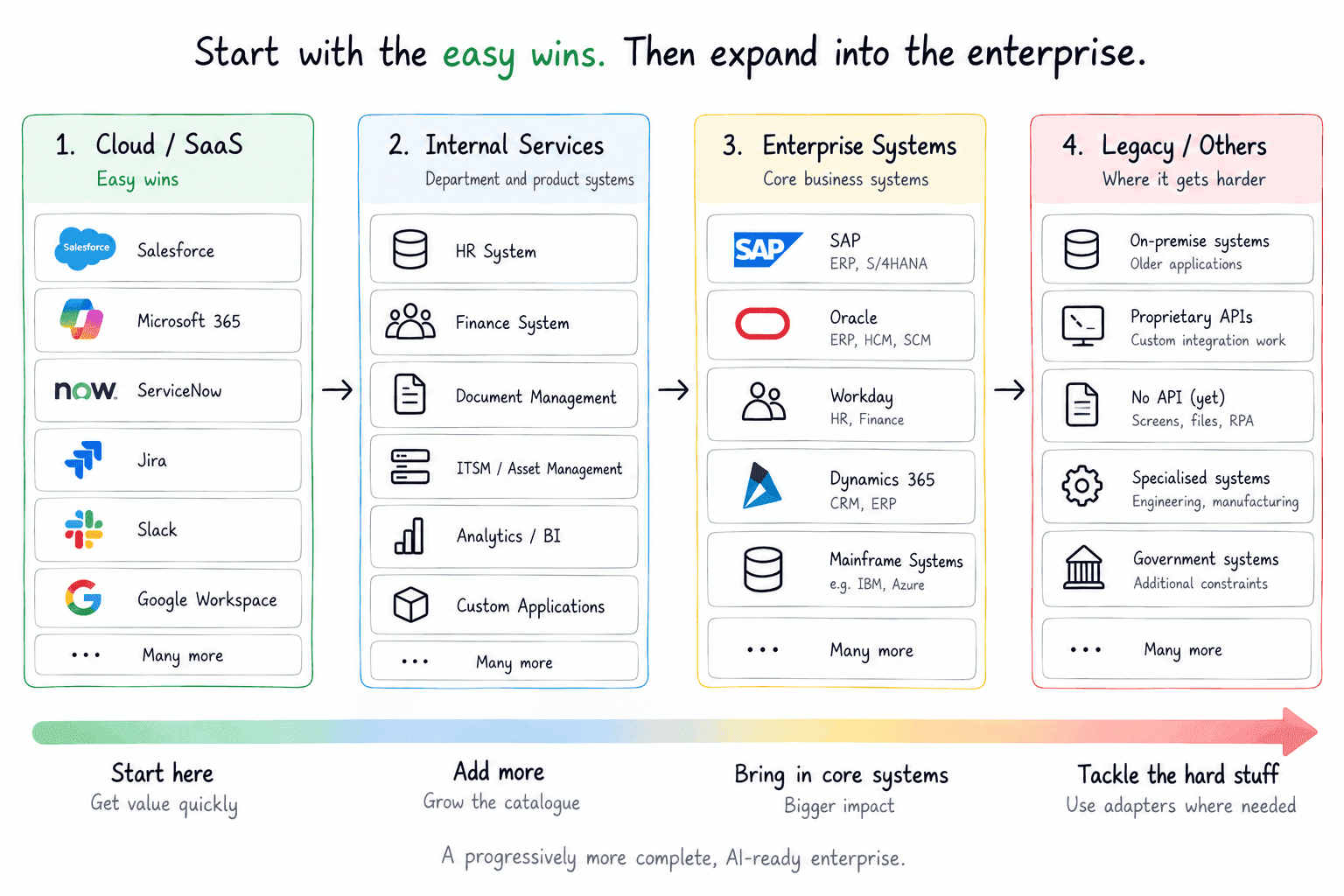
I'm not suggesting we spend two years mapping every system before anyone is allowed to build anything with AI.
Start small and grow the catalogue while people are already using it.
Imagine a ZIP file of OpenAPI specs
Imagine someone handed me this:
enterprise-apis.zip

├── salesforce.yaml
├── microsoft-365.yaml
├── servicenow.yaml
├── jira.yaml
├── sap.yaml
├── workday.yaml
├── confluence.yaml
├── internal-finance.yaml
└── ...
Inside are good OpenAPI specifications for 100 enterprise systems.
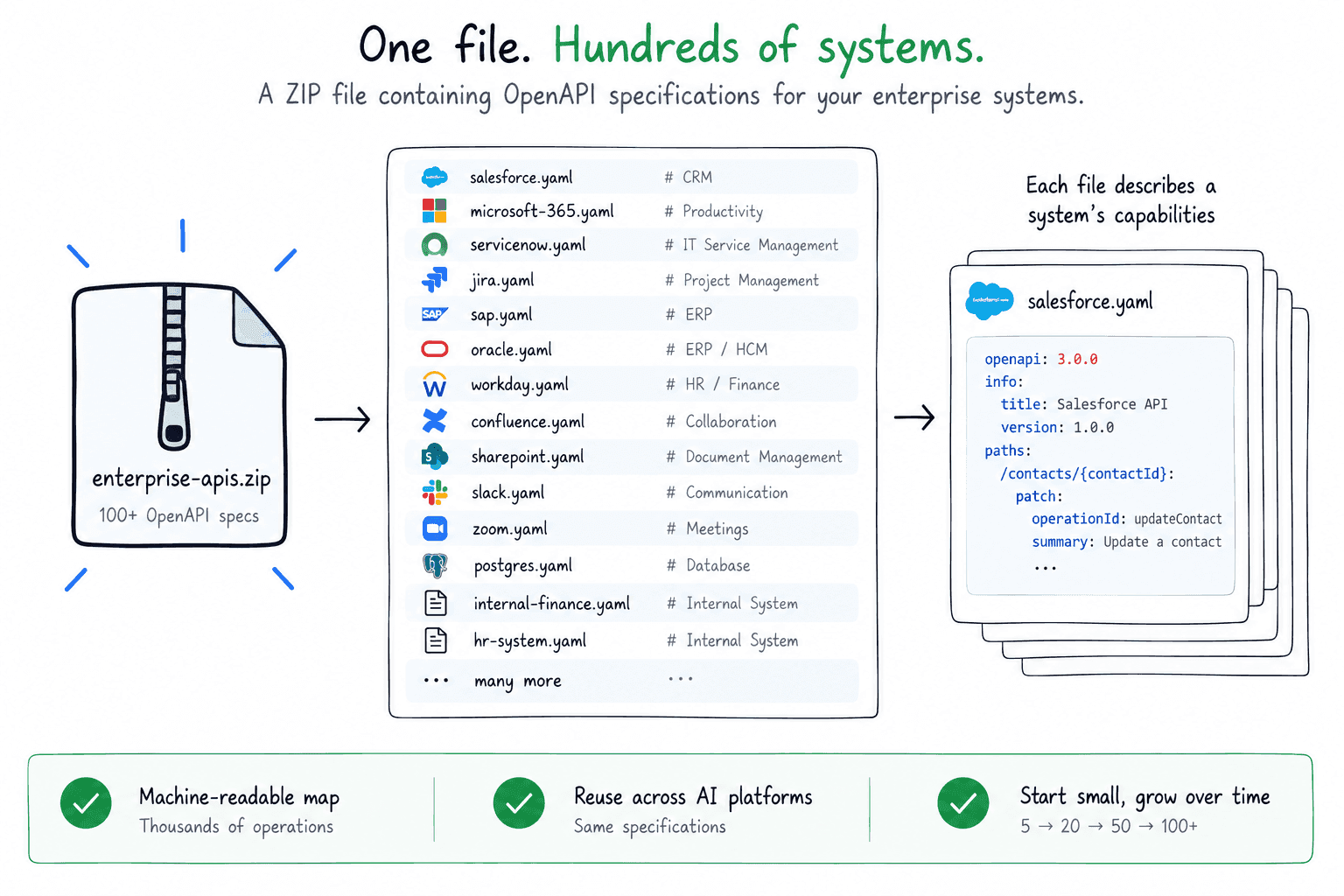
Potentially thousands of operations describing what those systems can actually do.
We've created something interesting:
A machine-readable map of a significant part of the enterprise.
And importantly, we don't have to reach 100 before it's useful.
5 is useful.
20 is more useful.
50 is better again.
The capability surface grows over time.
What this looks like
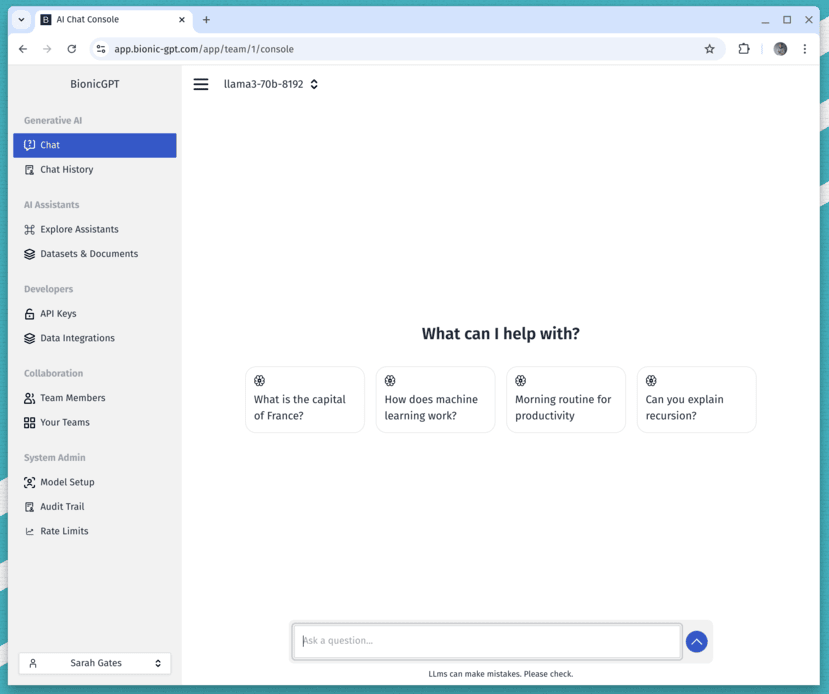
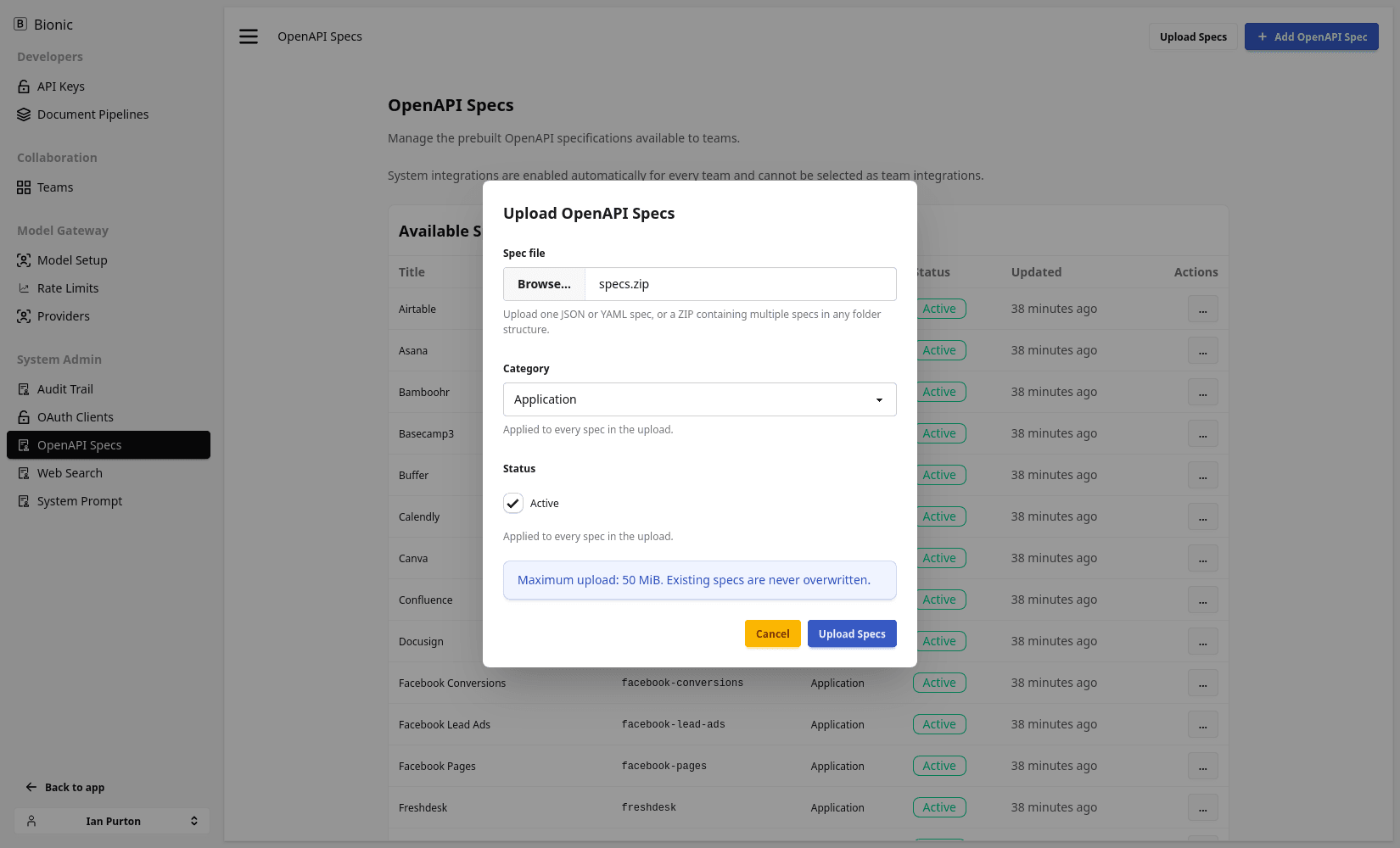
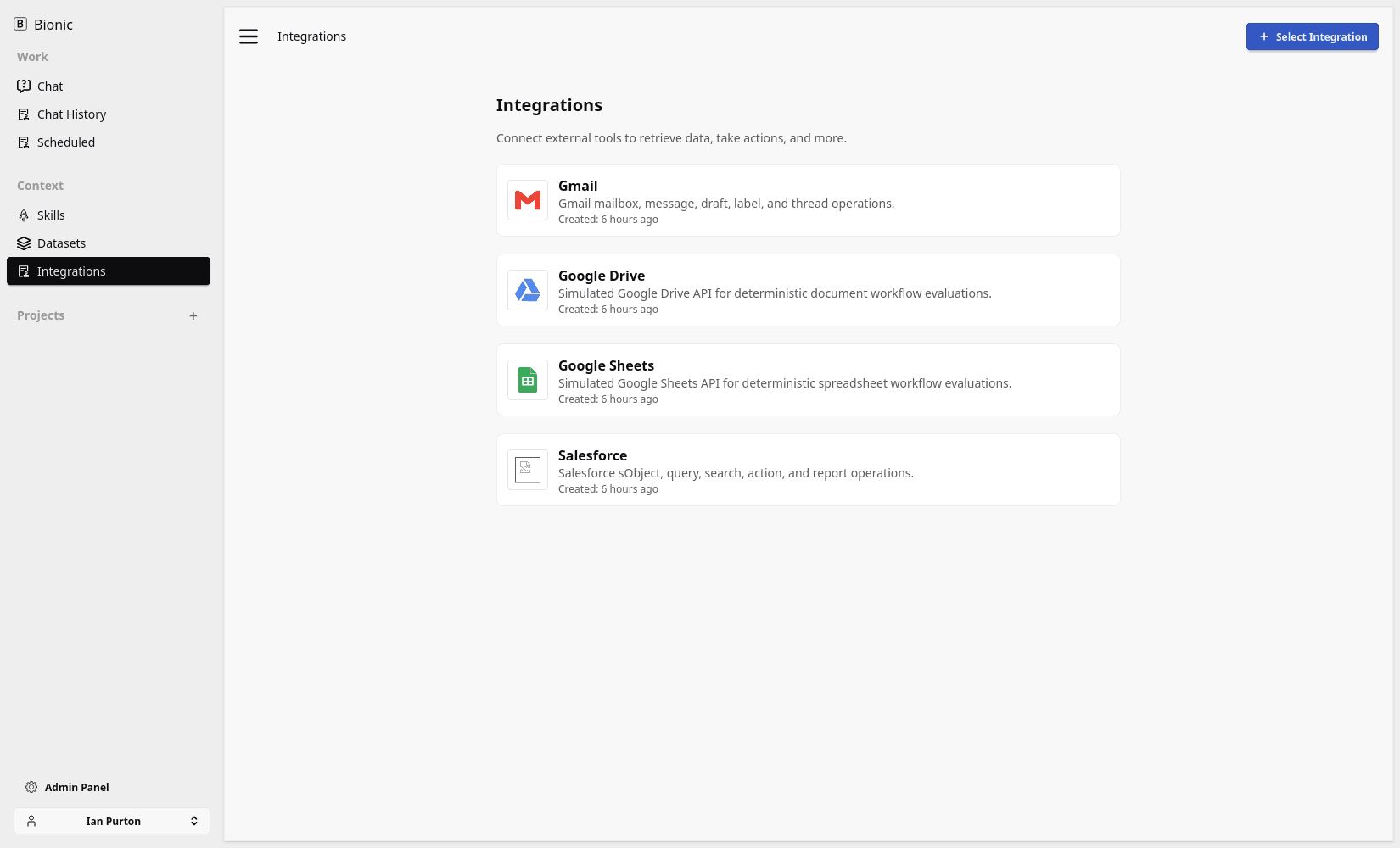
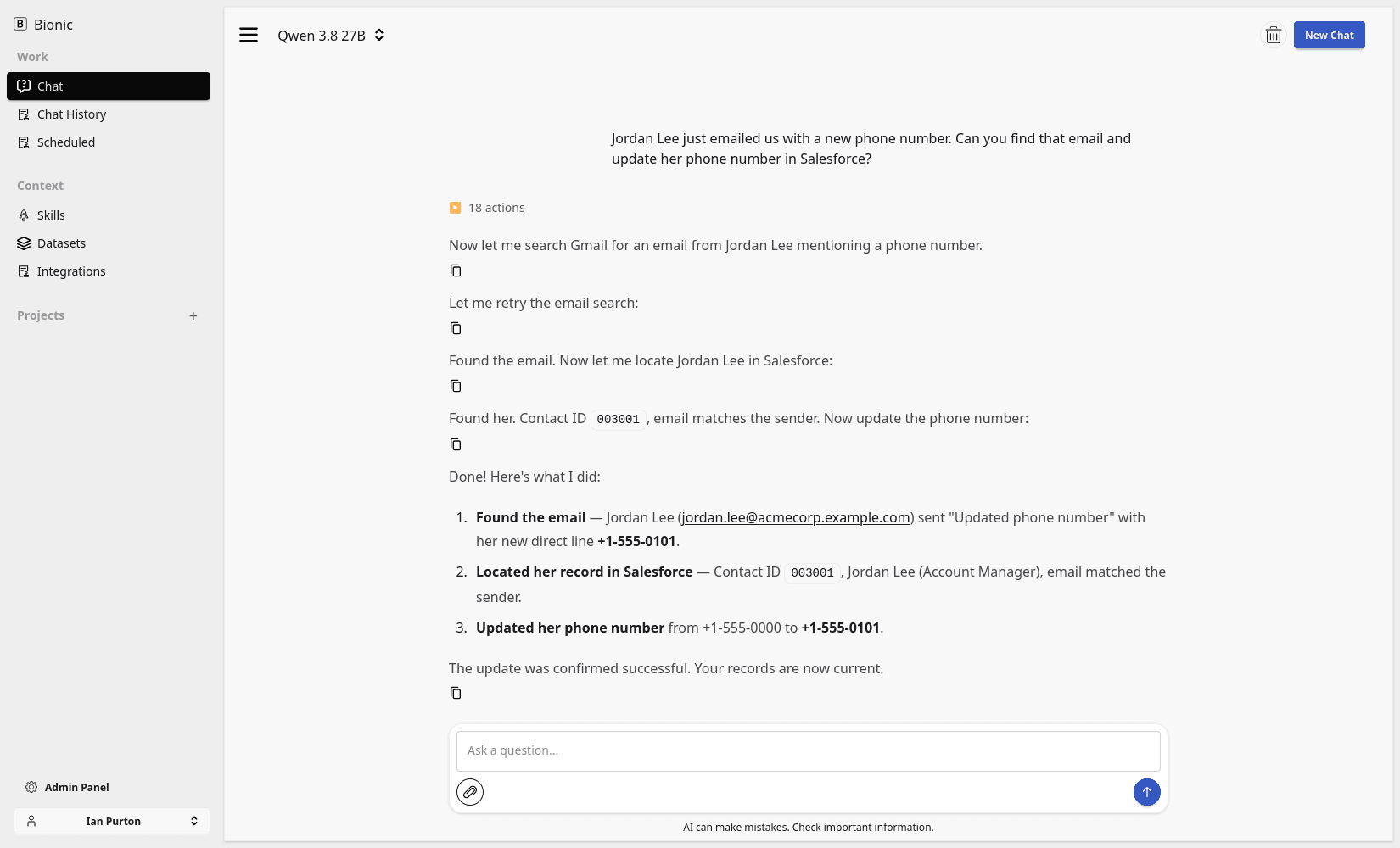
In practice, the flow is simple: upload the API specifications, make the integrations available to users, and let the AI use them in chat.
| Upload API specs | Select integrations | Use them in chat |
|---|---|---|
 |  |  |
A governed enterprise capability catalogue
Now we're getting somewhere interesting.
Instead of every AI project independently figuring out how to talk to Salesforce, SAP or ServiceNow, we have a reusable catalogue of enterprise capabilities.
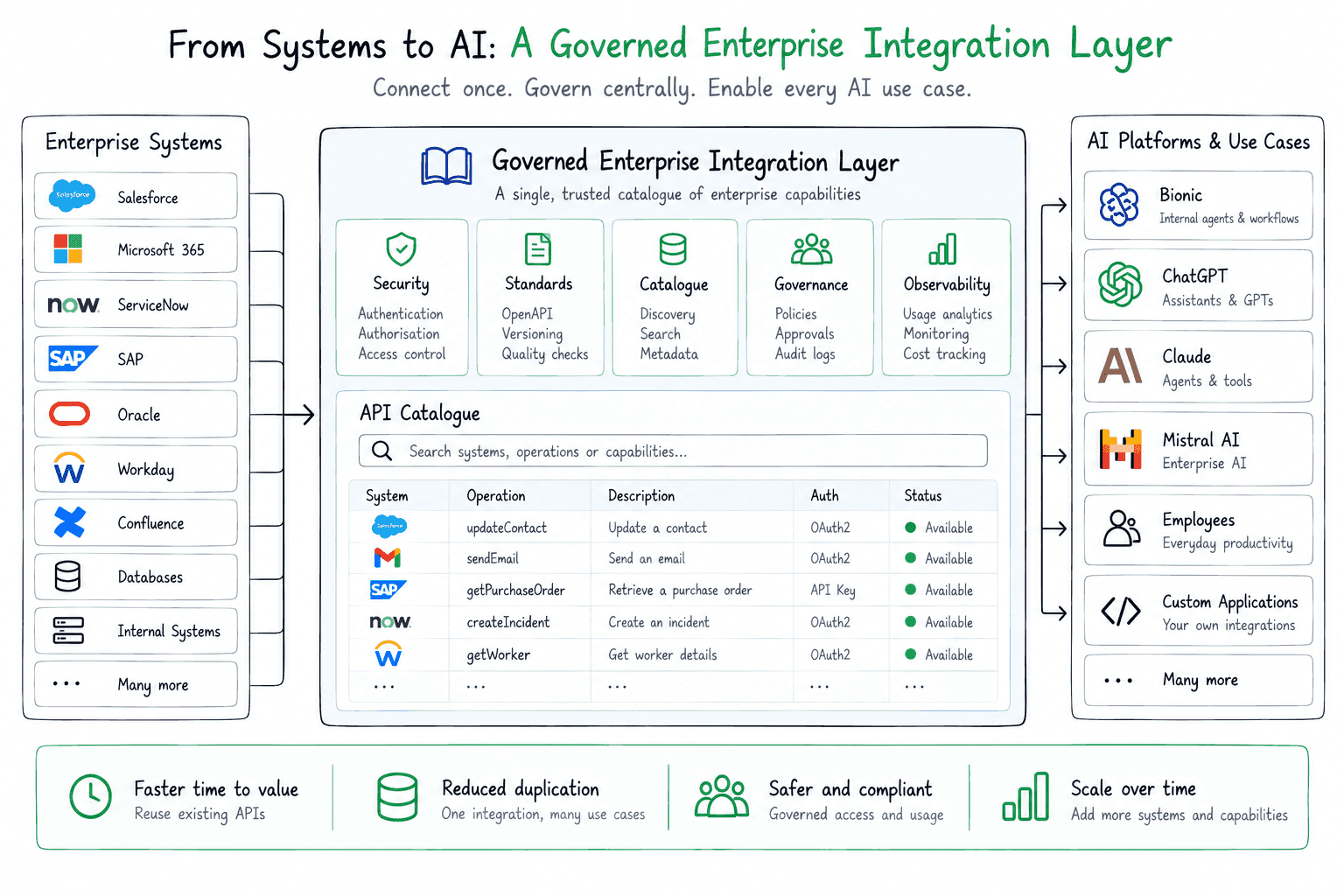
Now:
- Authentication can be managed.
- Access can be governed.
- Specifications can be versioned.
- Operations can be tested.
- Capabilities can be reused.
- Multiple AI platforms can consume them.
Most importantly:
Every system we add makes the next AI use case easier.
Why not MCP?
At this point there's an obvious question.
Why not just create MCP servers for everything?
MCP is useful.
But I think we need to be careful about which layer becomes our source of truth.
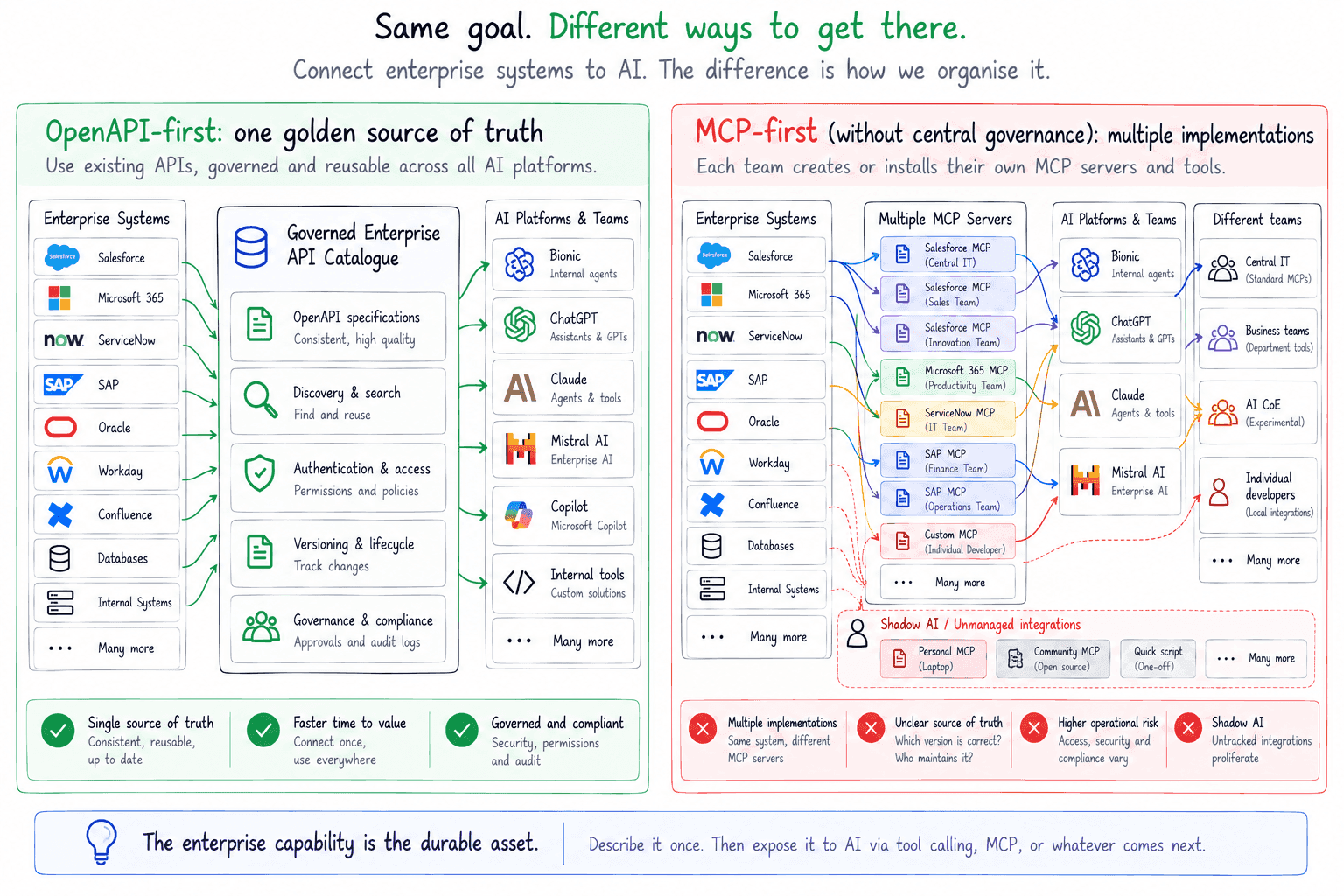
The enterprise already has APIs.
Those APIs aren't only there for AI. They're used by applications, integrations, developers and other systems.
My preference is therefore to keep the API definition as the durable enterprise asset.
OpenAPI describes the enterprise capability.
MCP, tool calling or whatever comes next can be ways of exposing that capability to AI.
What I don't want to create is another parallel integration estate that exists only for AI.
Conclusion
Connecting enterprise systems is only one part of an Agentic AI transformation.
But it's an important one.
If every new AI use case requires another team to hand-build integrations into the same enterprise systems, we're going to move slowly.
A reusable, governed catalogue of enterprise capabilities gives us another route.
Start with what's easy.
Grow it continuously.
And make the enterprise progressively more accessible to AI.